Tank vs Tankless Water Heaters: What Makes Sense for Denton Homes
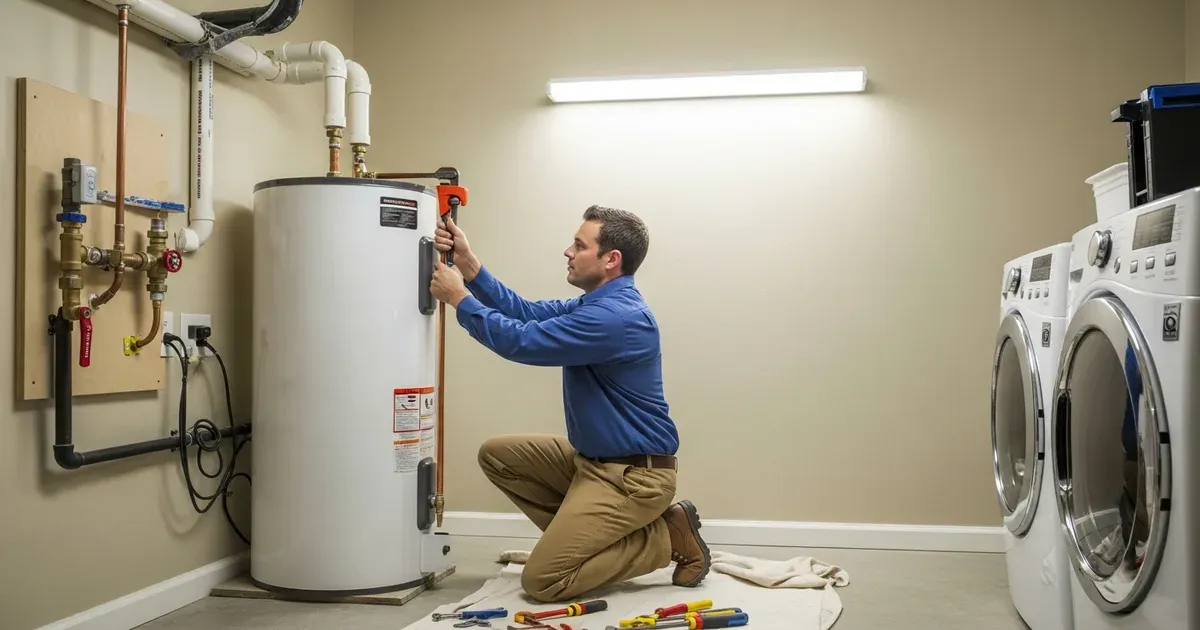
Your water heater accounts for roughly 18–20% of your home’s energy bill — second only to heating and cooling. When it is time to replace yours, Denton homeowners face a real decision: stick with a traditional tank unit or upgrade to tankless.
Both have legitimate advantages depending on your home, household size, and how long you plan to stay. Here is an honest comparison based on what actually matters in Denton.
How Each Type Works
Tank water heaters store 40–50 gallons of pre-heated water in an insulated tank, keeping it hot 24/7 whether you use it or not. When you draw hot water, cold water flows in to replace it and gets heated.
Tankless water heaters heat water on demand as it flows through the unit. No storage, no standby energy loss. When you turn on a hot water tap, the unit fires up and heats water in real time.
Cost Comparison for Denton Homes
| Factor | Tank (50-gal gas) | Tankless (gas) |
|---|---|---|
| Unit cost | $600 – $1,200 | $1,500 – $2,500 |
| Installation cost | $800 – $1,500 | $2,000 – $3,000 |
| Total installed | $1,400 – $2,700 | $3,500 – $5,500 |
| Annual energy cost | $350 – $450 | $200 – $280 |
| Annual savings vs tank | — | $100 – $170/year |
| Lifespan (Denton water) | 8–12 years | 15–20 years |
| Annual maintenance | Flush tank ($0 DIY) | Descale + flush ($150–$200 pro) |
The upfront cost difference is significant — $2,000 to $3,000 more for tankless. At $100–$170 per year in energy savings, the payback period is roughly 12–18 years. That math only works if you stay in the home long enough or factor in the longer equipment lifespan.
North Texas-Specific Considerations
Hard Water Is the Main Enemy
Denton’s water hardness runs 8–12 grains per gallon. That is classified as “hard” to “very hard.” Mineral buildup affects both types but hits tankless units harder because the heat exchanger operates at higher temperatures.
What this means in practice:
- Tank units should be flushed annually to remove sediment (most Denton homeowners never do this, which is why tanks fail early)
- Tankless units need professional descaling every 12 months ($150–$200 per visit) or the heat exchanger will scale over and lose efficiency
- A whole-house water softener ($1,500–$3,000 installed) extends the life of either type significantly
Gas vs Electric in Denton
Most Denton homes have natural gas service through Atmos Energy, which makes gas tankless units the practical choice. Electric tankless units that can handle whole-house demand (typically 27–36 kW) often require a 200-amp electrical panel — many older Denton homes still have 100 or 150-amp panels, adding $1,500–$2,500 for an upgrade.
Gas tankless units require proper venting (Category III stainless steel vent) and may need a larger gas line run to the unit. A good installer will assess both during the estimate.
Incoming Water Temperature
This matters more than people realize. Denton’s incoming water temperature drops to around 50-55 degrees in winter. Tankless units are rated by temperature rise — a unit rated for a 70-degree rise at 5 GPM will deliver less flow when it has to work harder in January. Make sure your installer sizes the unit for winter conditions, not summer.
When a Tank Water Heater Makes More Sense
- Your household uses less than 40 gallons per day (1–2 people)
- You plan to sell the home within 5 years
- Your budget is under $3,000
- You want the simplest, lowest-maintenance option
- You have a garage or utility closet with space for a 50-gallon tank
When Tankless Is the Better Choice
- Your household uses 50+ gallons daily (3+ people, multiple bathrooms)
- You plan to stay in the home 10+ years
- You want to reclaim the floor space a tank occupies
- You already have or plan to install a water softener
- You are willing to commit to annual professional maintenance
What About Hybrid Heat Pump Water Heaters?
Heat pump water heaters are gaining traction nationally, but they have a specific limitation in North Texas: they need to be installed in a space with consistent ambient air temperature above 40 degrees. An unconditioned Denton garage that drops into the 20s during winter cold snaps will force the unit into less-efficient backup electric mode. If your water heater location is inside conditioned space, a hybrid unit can be more efficient than both tank and tankless options.
Need a Water Heater Estimate?
Get quotes from licensed Denton plumbers for both tank and tankless options. Free estimates, no pressure.
Request a Plumbing Estimate →The right choice depends on your specific home and usage patterns. Do not let a salesperson push you toward tankless if the math does not work for your situation — and do not default to the cheapest tank if you are going to live in your home for the next 15 years.
Frequently Asked Questions
Is a tankless water heater worth it in Denton?
It depends on your situation. If you plan to stay in your home 8+ years, have natural gas service, and your household uses 40+ gallons of hot water daily, a tankless unit will likely pay for itself through energy savings. For smaller households or homes where you plan to sell within 5 years, a high-efficiency tank unit is usually the better investment.
How much does it cost to install a tankless water heater in Denton?
A gas tankless water heater installation in Denton typically costs $3,500–$5,500 including the unit, venting upgrades, and gas line modifications. An electric tankless installation runs $2,500–$4,000 but may require an electrical panel upgrade ($1,500–$2,500 additional) for whole-house units.
How long do water heaters last in North Texas?
Tank water heaters last 8–12 years in Denton, though hard water can shorten that to 6–8 years without regular flushing. Tankless units last 15–20 years with annual descaling. North Texas water hardness (8–12 grains per gallon) is the biggest factor affecting lifespan for both types.
How often do tankless water heaters need maintenance in Denton, Texas due to hard water?
Tankless water heaters in Denton require professional descaling and flushing annually. Denton's hard water (8-12 grains/gallon) causes mineral buildup on the heat exchanger, which reduces efficiency and can shorten the unit's lifespan if not regularly addressed. This essential service typically costs between $150 and $200.
What are the challenges of installing a tankless water heater in an older Denton home?
Older Denton homes often have electrical panels (100 or 150-amp) that are insufficient for whole-house electric tankless units, potentially requiring a costly 200-amp upgrade ($1,500-$2,500). Gas tankless models might need a larger gas line run to the unit and specific Category III stainless steel venting, which may not be present in existing setups, adding to installation complexity. A professional assessment is vital to identify these specific infrastructure requirements.
What are the main drawbacks of tankless water heaters for homes in Denton, Texas?
The primary drawback is a significantly higher upfront cost, often $2,000 to $3,000 more than a traditional tank unit. Additionally, due to Denton's hard water, tankless units require annual professional descaling maintenance, which typically costs $150-$200 per visit. While providing endless hot water, there can also be a slight delay in hot water reaching distant fixtures compared to a continuously heated tank.
How does Denton's cold incoming water temperature affect tankless water heater performance in winter?
During North Texas winters, Denton's incoming water temperature can drop considerably, which impacts a tankless unit's ability to heat water quickly to desired temperatures at high flow rates. While tankless units still provide continuous hot water, the maximum flow rate might be slightly reduced to maintain the set temperature, especially if multiple hot water fixtures are running simultaneously. Proper sizing by a qualified plumber is crucial to ensure optimal performance even with colder winter water.
Are permits required for tankless water heater installation in Denton, Texas?
Yes, in Denton and across Denton County, permits are generally required for any new water heater installation or replacement. This ensures the installation complies with local plumbing, gas, and electrical codes, including proper venting for gas units and adequate electrical supply for electric models. Always choose a licensed plumber who will secure the necessary permits and arrange for inspections to guarantee your installation meets all safety and local regulations.
Denton Home Services connects you with licensed, vetted contractors — fast and free.
Get a Free Estimate →