Landscaping Ideas That Thrive in Denton's Climate
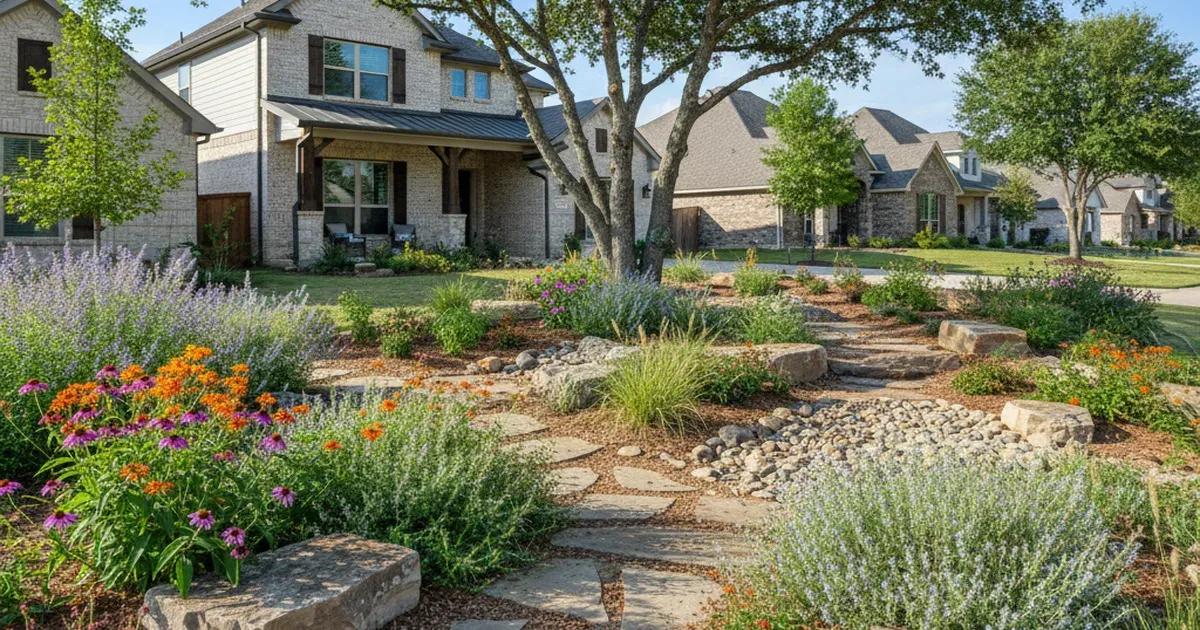
Denton sits right in the middle of USDA Zone 8a, which means scorching summers, unpredictable spring storms, and heavy clay soil that cracks when it dries and swells when it rains. A landscaping plan that works in Portland or even Austin will not necessarily work here.
These ideas are built around what actually thrives in Denton County — from Robson Ranch to Rayzor Ranch and everywhere in between.
Drought-Tolerant Front Yard Design
Water restrictions are a regular reality in Denton during summer months. Design your front yard around plants that look good even when rainfall drops to zero for three weeks straight.
Plants that perform well in Denton:
- Texas Sage (Leucophyllum frutescens) — blooms purple after summer rains, zero supplemental water once established
- Flame Acanthus — hummingbird magnet, handles full sun and clay soil
- Mexican Feathergrass — soft texture, almost no water needs, looks good year-round
- Blackfoot Daisy — low spreading perennial, blooms spring through fall
- Autumn Sage (Salvia greggii) — comes in red, pink, coral; deer-resistant
Group these in mulched beds with 3–4 inches of hardwood mulch to retain moisture and suppress weeds. Replace mulch annually — Denton’s heat breaks it down faster than you might expect.
Lawn Strategy: Less Grass, Better Grass
The biggest water and maintenance cost in any Denton yard is the lawn. Consider reducing your turf area by 30–40% and replacing it with mulched beds, decomposed granite paths, or ground cover.
| Grass Type | Sun Needs | Water Needs | Clay Tolerance | Best For |
|---|---|---|---|---|
| Bermuda (common) | Full sun | Low–Medium | Excellent | High-traffic yards |
| Bermuda (TifTuf) | Full sun | Low | Excellent | Water-conscious homeowners |
| Zoysia (Palisades) | Sun to part shade | Medium | Good | Shaded areas, front yards |
| Buffalo Grass | Full sun | Very Low | Excellent | Low-traffic, natural look |
| St. Augustine | Sun to shade | High | Fair | Shady yards only |
For most Denton homes, Bermuda in the sunny areas and Zoysia under tree canopy is the most practical combination.
Smart Irrigation for Clay Soil
Clay soil absorbs water slowly. If you run your sprinklers for 20 minutes straight, most of that water runs off into the street. Instead:
- Cycle and soak: Run each zone for 5–7 minutes, wait 30 minutes, then run again. This gives clay time to absorb.
- Water early: Start your system between 4:00–6:00 AM. Denton’s watering ordinance allows twice-per-week irrigation during summer restrictions.
- Drip irrigation for beds: Skip overhead sprinklers on planting beds entirely. Drip lines deliver water directly to roots with almost no waste.
Shade Trees That Work in Denton
If your lot has no mature trees, planting one now will pay off for decades. Avoid Bradford pears (they split in storms) and silver maples (shallow invasive roots).
Recommended shade trees:
- Live Oak — the gold standard for North Texas; slow-growing but nearly indestructible
- Cedar Elm — native, fast-growing, handles drought and clay
- Chinquapin Oak — underused; great fall color, deep roots
- Desert Willow — smaller tree with showy flowers, extremely drought-tolerant
Low-Maintenance Bed Edging
Steel edging (14-gauge) between your lawn and planting beds keeps Bermuda grass from invading. Plastic edging fails within two years in Denton’s heat. Budget $3–$5 per linear foot installed.
Need Help With Your Denton Yard?
From seasonal cleanups to full landscape redesigns, get a free estimate from a local Denton yard maintenance crew.
Get a Yard Maintenance Estimate →The best Denton landscapes work with the climate instead of fighting it. Less water, tougher plants, and smarter irrigation will save you money every summer.
Frequently Asked Questions
What is the best grass for Denton, TX?
Bermuda grass is the top performer for most Denton yards — it handles the heat, tolerates clay soil, and recovers well from drought. Zoysia is a good alternative for partially shaded areas. Avoid fescue and ryegrass as permanent lawns; they struggle through North Texas summers.
When should I plant in Denton, TX?
Plant warm-season grasses and most perennials from mid-April through May. Fall planting (October–November) works well for trees, shrubs, and cool-season annuals. Avoid planting anything in July or August without an established irrigation plan.
How do I deal with clay soil in my Denton yard?
Amend planting beds with 3–4 inches of compost worked into the top 6–8 inches of soil. For lawns, top-dress with a thin layer of compost each fall. Avoid tilling wet clay — it compacts worse. Raised beds are a practical alternative for vegetable gardens.
How much does professional drought-tolerant landscaping typically cost in Denton, TX?
The cost for professional drought-tolerant landscaping in Denton can vary widely, but homeowners often budget between $5,000 and $15,000 for a significant front or backyard overhaul. This range depends on factors like the size of the area, the number of plants, hardscaping elements, and the complexity of the irrigation system. Smaller projects like adding a new planting bed might start around $1,500-$3,000.
What are common landscaping mistakes Denton homeowners make with their yards?
Many Denton homeowners overwater their lawns, especially with clay soil, leading to runoff and wasted water. Another common mistake is planting non-native species that struggle in North Texas's intense summer heat and heavy clay, requiring excessive care or quickly dying. Failing to use adequate mulch or choosing the wrong shade trees that break easily in storms are also frequent issues.
Are there specific watering restrictions or landscaping ordinances in Denton, Texas homeowners should follow?
Yes, the City of Denton typically implements a mandatory twice-per-week watering ordinance during the summer months to conserve water. This ordinance specifies which days you can water based on your address and prohibits watering between 10 AM and 6 PM. Always check the official City of Denton Utilities website for the most current restrictions and guidelines to avoid fines.
What are some effective low-maintenance ground cover alternatives to traditional turf grass for Denton yards?
For Denton yards, excellent low-maintenance ground cover alternatives include Frogfruit (Phyla nodiflora), a native Texas plant that tolerates foot traffic and drought, and Horseherb (Dyschoriste linearis), which thrives in partial shade. Sedums and various types of creeping thyme also do well in sunny, well-drained spots, offering texture and reducing water consumption compared to a traditional lawn. These options require less mowing and watering, perfect for areas like shaded side yards or between stepping stones.
How long does it take for a new drought-tolerant landscape to establish in Denton County?
Most drought-tolerant plants, once installed in Denton County, require a period of consistent watering for the first 6-12 months to become fully established. During this time, roots are developing to seek out moisture independently. After the initial establishment phase, typically by the second summer, these plants will be significantly more resilient and require minimal supplemental irrigation, especially those truly native to North Texas.
Denton Home Services connects you with licensed, vetted contractors — fast and free.
Get a Free Estimate →