How to Winterize Your Irrigation System in Texas
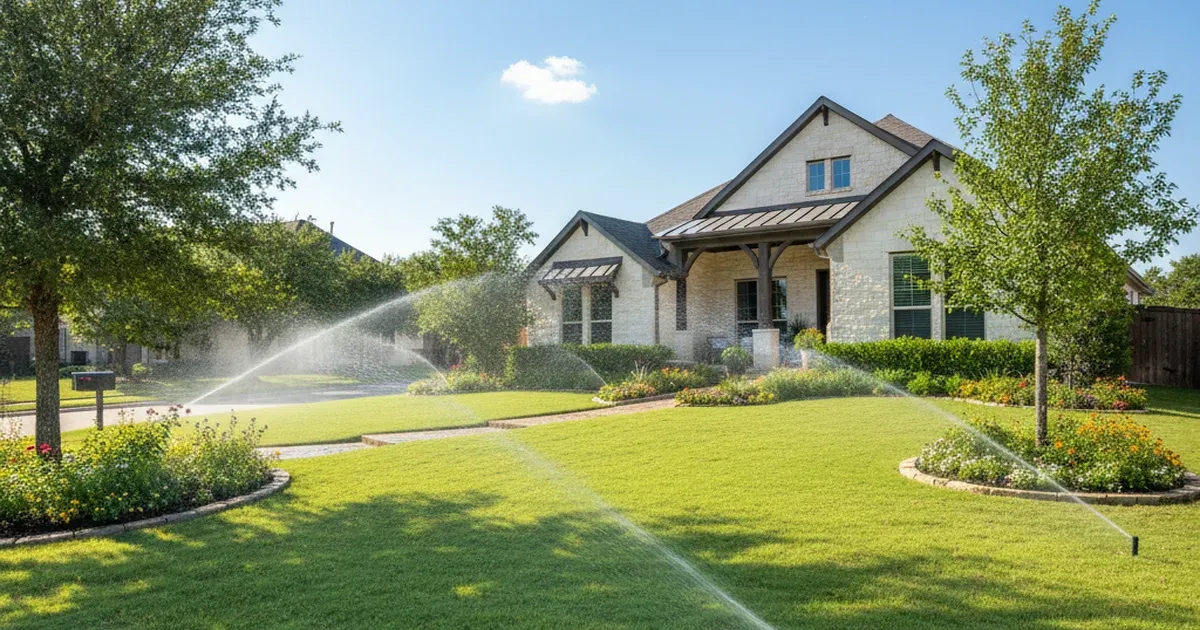
North Texas weather is unpredictable. A 75-degree Tuesday can drop to 22 degrees by Thursday night — and that’s exactly the kind of swing that destroys irrigation systems. Here’s how to protect yours.
Why Texas Irrigation Systems Are Vulnerable
Many homeowners assume Texas winters are too mild to worry about freeze damage. The February 2021 winter storm and the December 2022 freeze proved otherwise. Even in a normal Denton winter, temperatures dip below freezing 25–35 times between November and March.
The most vulnerable components:
- Backflow preventer — Usually above ground and the first thing to crack. Replacement runs $250–$500.
- Valve manifolds — Shallow-buried valves in Denton’s clay soil often sit in water-saturated ground, making freeze damage more likely
- Exposed PVC risers — Any above-ground PVC is at risk below 28°F
- Drip irrigation emitters — Residual water in drip lines freezes and splits tubing
Step-by-Step Winterization
Option 1: Professional Blow-Out (Recommended)
This is the standard method for Denton-area irrigation systems and what most pros recommend:
- The technician connects a commercial air compressor (80–100 PSI, 20+ CFM) to the system
- Each zone is blown out individually until no water mist is visible at the heads
- The backflow preventer is drained and left in a 45-degree open position
- The controller is set to “rain mode” or turned off (keeps programming intact)
Time: 30–60 minutes for a typical 6–8 zone system.
Option 2: Manual Drain (DIY)
If your system has manual drain valves at low points:
- Shut off the water supply at the irrigation shutoff valve
- Open all manual drain valves (usually located at the lowest points in each zone)
- Open the test cocks on the backflow preventer
- Run each zone for 30 seconds to release pressure
- Leave drain valves open through winter
Limitation: Manual drains don’t remove all water. Lines that run uphill or have dips will retain water.
What It Costs
| Service | Typical Cost |
|---|---|
| Professional blow-out (up to 8 zones) | $60 – $125 |
| Professional blow-out (9–16 zones) | $100 – $175 |
| Backflow preventer insulation cover | $15 – $40 (DIY) |
| Backflow preventer replacement (if cracked) | $250 – $500 |
| Burst pipe repair (per break) | $200 – $400 |
| Full spring startup inspection | $50 – $100 |
Prices reflect the Denton, TX area as of 2026.
Spending $60–$125 on a blow-out is a lot cheaper than the $500+ repair bill from one hard freeze.
The Backflow Preventer: Don’t Forget It
The backflow preventer is the most expensive single component in your irrigation system, and it sits above ground exposed to every freeze. After winterizing:
- Drain it completely by opening both test cocks
- Leave the shutoff handles at a 45-degree angle (half-open)
- Install an insulated cover — especially important for Denton homes where the backflow is on the north side of the house
Don't Risk a $500 Repair Bill
Get your irrigation system winterized by a Denton-area pro. Quick scheduling, fair pricing, no surprises.
Schedule Winterization →Spring Startup Checklist
When temps stabilize above freezing in March, don’t just flip the system back on:
- Close all drain valves and test cocks
- Turn the water supply on slowly — opening it fast can cause water hammer and crack fittings
- Run each zone manually and inspect for broken heads, leaks, and misaligned spray patterns
- Check your controller schedule — North Texas lawns need different watering in spring than summer
- Verify your rain sensor is working (required by Texas law for systems installed after 2009)
Bottom Line
Winterizing your irrigation system is the single most cost-effective yard maintenance task you can do in fall. For most Denton homeowners with 6–8 zones, a professional blow-out takes under an hour and costs less than a single broken head replacement.
Frequently Asked Questions
When should I winterize my sprinkler system in Denton, TX?
Most Denton-area homeowners should winterize between mid-November and early December, before the first hard freeze. The average first freeze date for Denton County is November 20.
Can I winterize my own irrigation system?
You can perform a manual drain on simple systems, but blow-out winterization requires an air compressor rated at 50–80 PSI with enough CFM. Most homeowner compressors are too small. Professional blow-outs typically cost $60–$125.
What happens if I don't winterize my sprinkler system in Texas?
Residual water in pipes, valves, and backflow preventers can freeze and crack during a hard freeze. Repair costs for burst irrigation pipes typically run $200–$800, and backflow preventer replacement costs $250–$500.
What is the typical cost for a professional irrigation blow-out service in Denton County?
For a standard irrigation system with up to 8 zones in Denton County, a professional blow-out typically costs between $60 and $125. Larger systems with 9-16 zones may range from $100 to $175, which is a small investment compared to potential freeze damage repairs costing $200-$500 per break.
What's the main difference between a professional blow-out and manual drain for Denton irrigation systems?
A professional blow-out uses a commercial air compressor (80-100 PSI) to force nearly all water out of every zone, ensuring comprehensive protection against freezes. Manual draining, while possible for some systems, only removes water from low points and leaves residual water in lines that run uphill or have dips, making it less effective for North Texas's unpredictable winters.
Are there any specific Denton, TX regulations or permits required for irrigation system repairs after freeze damage?
While routine winterization doesn't typically require a permit in Denton, major repairs or replacements of irrigation components like the backflow preventer may require a plumbing permit from the City of Denton Development Services. It's always best to check with a licensed irrigator or the city's permitting office for specific project requirements to ensure compliance with local codes.
How do I protect my backflow preventer from freezing in Denton's unpredictable North Texas weather?
After draining your irrigation system, specifically ensure your backflow preventer is completely drained by opening its test cocks and leaving the shutoff handles at a 45-degree angle. Installing an insulated cover is highly recommended, especially for units located on the north side of your Denton home where they are most exposed to cold winds.
What temperature should I watch for in Denton, Texas, to know it's time to winterize my sprinkler system?
You should plan to winterize your Denton sprinkler system before temperatures consistently drop below 32°F, or when a hard freeze (28°F or below) is predicted for more than a few hours. North Texas typically experiences 25-35 freezes between November and March, making proactive winterization crucial even if daytime temperatures rebound.
Denton Home Services connects you with licensed, vetted contractors — fast and free.
Get a Free Estimate →