Cost of French Drain Installation in Denton County
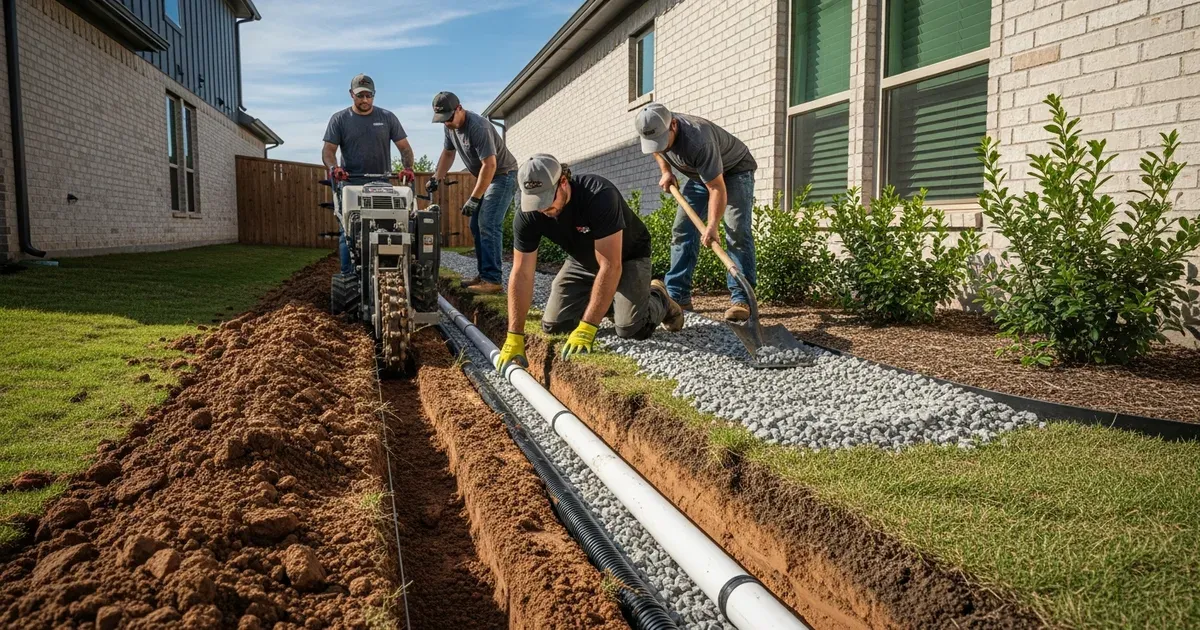
Living in Denton County, you know that our weather can be a bit unpredictable. One minute it’s sunny and beautiful, the next a torrential downpour hits. While rain is essential, too much of it can lead to serious water problems around your home. Standing water, soggy lawns, and even foundation issues are common complaints, especially with our area’s unique clay soil. That’s where a French drain comes in handy.
A French drain is a simple yet effective solution for redirecting excess water away from your property. It’s designed to collect surface water and groundwater, moving it to a safer location where it can drain naturally or connect to a storm drain. For Denton homeowners dealing with persistent puddles, damp crawl spaces, or worried about their foundation, understanding French drains and their costs is a smart move.
What is a French Drain and How Does It Work?
At its core, a French drain is a trench filled with gravel, containing a perforated pipe. The trench is typically sloped gently away from your home or the problem area. Water seeps through the gravel, enters the perforated pipe, and is then channeled away to a suitable discharge point. This could be a lower part of your yard, a street storm drain (with proper permits), or even a dry well.
The gravel acts as a filter, preventing soil and debris from clogging the pipe. Often, a special fabric liner is used around the gravel to further prevent sediment buildup. This system works quietly and efficiently underground, helping to keep your property dry and protected from water damage.
Why Denton Homeowners Often Need French Drains
Denton County presents specific challenges that make French drains a valuable investment for many homeowners. Our local climate and soil conditions create a perfect storm for water-related issues.
- Heavy Clay Soil: Denton is known for its expansive clay soil. This type of soil doesn’t drain well and can hold water for extended periods after a rainstorm. When it gets wet, clay soil expands; when it dries out, it shrinks. This constant movement can put immense pressure on your home’s foundation.
- Sudden, Heavy Rainstorms: We frequently experience intense thunderstorms, especially during spring and fall. These downpours can quickly overwhelm a yard’s natural drainage capacity, leading to standing water around your house, in your flower beds, or even in your driveway.
- Foundation Protection: Because of our clay soil, foundation problems are a major concern in Denton. Excess moisture around your foundation can lead to cracks, shifting, and costly repairs. A French drain helps keep the soil moisture levels more consistent, reducing stress on your home’s structure. You can learn more about protecting your foundation on our dedicated foundation repair page.
- Protecting Landscaping and Outdoor Living Spaces: Standing water can drown plants, create muddy areas, and make your yard unusable after rain. It can also lead to mosquito breeding grounds, a common nuisance in North Texas. A French drain keeps your lawn and landscaping healthy and your outdoor spaces enjoyable.
- Basement or Crawl Space Moisture: If you have a basement or crawl space, excess exterior water can seep through walls, leading to dampness, mold, and mildew. A perimeter French drain can intercept this water before it reaches your home’s lower levels.
These local factors make proactive water management crucial for maintaining your home’s value and structural integrity in Denton.
Types of French Drains
While the basic principle is the same, French drains can be adapted to different needs:
- Surface French Drains: These are shallower and designed to collect water that flows across the surface of your yard. They often have a grate cover at the surface level, making them look like a channel drain, but they still use the gravel and perforated pipe system underneath.
- Deep French Drains (Curtain Drains): These are installed deeper into the ground to intercept groundwater or water flowing underground before it reaches your home’s foundation or a low-lying area. They are often placed uphill from the area needing protection.
- Perimeter French Drains: Installed around the exterior of a home’s foundation, these drains protect basements and crawl spaces from water intrusion.
The type of drain needed depends on the specific water problem you’re trying to solve. A professional will assess your property’s grading, soil type, and water flow patterns to recommend the best solution.
Factors Affecting French Drain Installation Costs in Denton County
The cost of installing a French drain in Denton County can vary quite a bit. It’s not a one-size-fits-all project because every yard and every water problem is unique. Here are the main factors that will influence your final price:
- Length of the Drain: This is usually the biggest factor. The longer the drain, the more materials and labor will be needed. Most residential French drains range from 50 to 200 linear feet.
- Depth and Width of the Trench: A deeper or wider trench requires more excavation, more gravel, and more time, which increases costs. A standard residential French drain might be 18-24 inches deep and 6-12 inches wide.
- Soil Type: Denton’s heavy clay soil can make excavation significantly more challenging and time-consuming than digging in sandy loam. This often requires more robust equipment and more labor hours, driving up costs.
- Accessibility: If the work area is easy to access with machinery, the job will be quicker and cheaper. Tight spaces, existing landscaping, fences, or patios that need to be removed or worked around will increase labor costs.
- Materials Used:
- Pipe Type: Standard PVC perforated pipe is common. Heavier-duty Schedule 40 PVC or specialized corrugated pipes can affect costs.
- Gravel: The type and amount of gravel (e.g., washed gravel, crushed stone) impact the price.
- Filter Fabric: Using high-quality geotextile fabric to prevent clogging is a smart investment, but adds to material costs.
- Grates/Covers: For surface drains, decorative grates or covers can add to the aesthetic but also the price.
- Labor Costs: This often accounts for the largest portion of the project cost. Denton-area labor rates for skilled excavation and drainage professionals will be a key factor.
- Excavation Method: Manual digging is very labor-intensive and slow, often used only for small, difficult-to-access areas. Using a mini-excavator or trenching machine is faster and more efficient for larger projects, but involves equipment rental or ownership costs.
- Permits: While not always required for simple French drains on private property, if your project involves connecting to a public storm drain system or significantly altering the grade of your property, you might need a permit from the City of Denton Development Services. Always check local codes.
- Utility Line Location: Before any digging, it’s absolutely crucial to call 811 to have underground utility lines (like those from Oncor, natural gas, water, and sewer) marked. This prevents dangerous and costly damage, but the marking process itself doesn’t add to the project cost.
- Restoration and Landscaping: After the drain is installed, you’ll need to consider the cost of backfilling the trench, replacing removed soil, and repairing any disturbed landscaping, grass, or hardscaping.
Average Cost of French Drain Installation in Denton County
Based on these factors, the average cost for French drain installation in Denton County typically ranges from $2,500 to $10,000 or more for a residential project. This translates to roughly $20 to $50 per linear foot, depending on the complexity.
For a smaller, straightforward project (e.g., 50-75 linear feet in an easily accessible area with standard materials), you might expect to pay $1,500 to $3,000. However, for a more extensive or complex system (e.g., 150-200+ linear feet, deep trench, difficult soil, extensive landscaping restoration), costs can easily climb to $7,000 to $12,000+.
Remember, these are averages. Getting multiple detailed quotes from local Denton contractors is the best way to get an accurate estimate for your specific situation.
Cost Breakdown: What You’re Paying For
To give you a clearer picture, here’s a typical breakdown of costs for a medium-sized French drain project (around 100 linear feet) in Denton:
| Cost Category | Typical Percentage of Total Cost | Estimated Cost Range (for 100 ft drain) | Notes
Frequently Asked Questions
What factors influence the cost of French drain installation in Denton County?
The total cost depends on the length and depth of the trench, the type of pipe and gravel used, and the complexity of the landscape. Accessibility to the work area and the chosen discharge point also significantly impact labor and material expenses for Denton properties.
How long does it typically take to install a French drain at a Denton home?
A standard French drain installation for an average residential property in Denton usually takes 1-3 days. Larger or more complex systems, especially those requiring extensive excavation or connection to municipal storm drains, might extend to 4-5 days.
Is it feasible to install a French drain as a DIY project for a Denton homeowner?
While a small, simple French drain might be a DIY project, larger or more critical installations, particularly around foundations in Denton's expansive clay soil, are best left to professionals. Proper sloping, trenching, and material selection are crucial to avoid costly future issues.
Do I need a permit to install a French drain at my property in Denton, TX?
For most residential French drains designed to redirect water within your own property, a permit is typically not required by the City of Denton. However, if your system involves connecting to a public storm drain or significantly altering the natural flow of water onto adjacent properties, you may need to consult the Denton Public Works Department for specific regulations and permits.
What kind of maintenance does a French drain require in North Texas's climate?
French drains are relatively low-maintenance, but annual inspection is recommended to ensure proper function, especially after heavy spring rains common in North Texas. Clearing any debris from the discharge point and ensuring the trench area remains clear of heavy landscaping or roots will help prevent clogs and maintain effectiveness.
How effective are French drains at mitigating water issues on Denton's clay soil?
French drains are highly effective for Denton's heavy clay soil because they provide a dedicated pathway for water to escape, preventing saturation and hydrostatic pressure against foundations. By actively moving water away, they significantly reduce the risk of standing water and foundation stress common in areas like Southridge or Guyer.
What's the difference between a French drain and a surface drain for Denton homes?
A French drain primarily addresses subsurface water and high water tables by collecting water underground, ideal for saturated lawns or foundation protection in Denton. A surface drain, like a trench drain or catch basin, collects visible surface runoff and channels it away, often used for patios, driveways, or areas with immediate pooling.
Can a French drain prevent standing water in my flower beds or near my patio in Denton?
Yes, a properly installed French drain can effectively prevent standing water in flower beds or near patios by intercepting and redirecting excess moisture before it accumulates. This is particularly beneficial in Denton's neighborhoods with poor natural drainage, helping protect your landscaping and outdoor living spaces from water damage.
Denton Home Services connects you with licensed, vetted contractors — fast and free.
Get a Free Estimate →