How to Childproof Your Pool: A Denton Parent's Guide
Denton, with its beautiful parks, friendly neighborhoods like Robson Ranch and Rayzor Ranch, and those famously hot Texas summers, is a wonderful place to raise a family. Many Denton homeowners enjoy the luxury of a backyard pool, which offers a fantastic way to beat the heat. But with the joy of a pool comes the serious responsibility of ensuring it’s a safe environment, especially for our little ones. Childproofing your pool isn’t just a good idea; it’s an essential step for any Denton parent.
Here in Denton County, where temperatures often soar past 100 degrees for weeks on end, pools are a central part of summer life. This means kids are naturally drawn to them, and even a moment’s lapse in supervision can have tragic consequences. Drowning is a leading cause of accidental death for young children, and most of these incidents happen in residential pools. That’s why creating multiple layers of protection around your pool is the most effective strategy. Think of it as building a fortress of safety for your family.
The “Layers of Protection” Approach to Pool Safety
When it comes to childproofing your pool, relying on a single safety measure just isn’t enough. Experts recommend a “layers of protection” approach, where several different safety features work together to prevent accidents. If one layer fails or is bypassed, another is there to catch it. This multi-faceted strategy provides the strongest defense against unauthorized pool access and potential hazards. We’ll explore each critical layer, discussing specific options, costs, and how they apply to life here in Denton.
Layer 1: Secure Fencing – The Essential Barrier
A proper pool fence is arguably the most critical layer of protection. It creates a physical barrier that prevents unsupervised access to the pool area. For Denton homeowners, understanding local codes is key. The City of Denton has specific regulations regarding pool barriers, typically requiring a fence at least 48 inches (4 feet) high, with self-closing and self-latching gates that open outwards and have latches placed high enough to be out of a child’s reach. Always double-check with Denton Development Services for the most current and specific requirements before installing or modifying your pool fence.
There are a few main types of pool fences to consider:
-
Permanent Fences: These are typically made of materials like aluminum, wrought iron, vinyl, or wood. They are durable, offer a strong visual barrier, and can enhance your home’s aesthetic.
- Aluminum/Wrought Iron: These are strong, durable, and offer good visibility. They can withstand Denton’s weather, including our occasional hail storms, fairly well. Expect to pay $20-$40 per linear foot installed for a quality aluminum or wrought iron fence. For an average 100-foot pool perimeter, this could range from $2,000 to $4,000.
- Vinyl: A low-maintenance option that comes in various styles. It’s resistant to our hot sun and doesn’t rot or rust. Costs are similar to aluminum, often $25-$45 per linear foot.
- Wood: While more affordable initially, wood requires more maintenance in Denton’s climate due to intense sun and occasional moisture. It can also warp or splinter, potentially creating gaps. Wood fences might cost $15-$30 per linear foot.
-
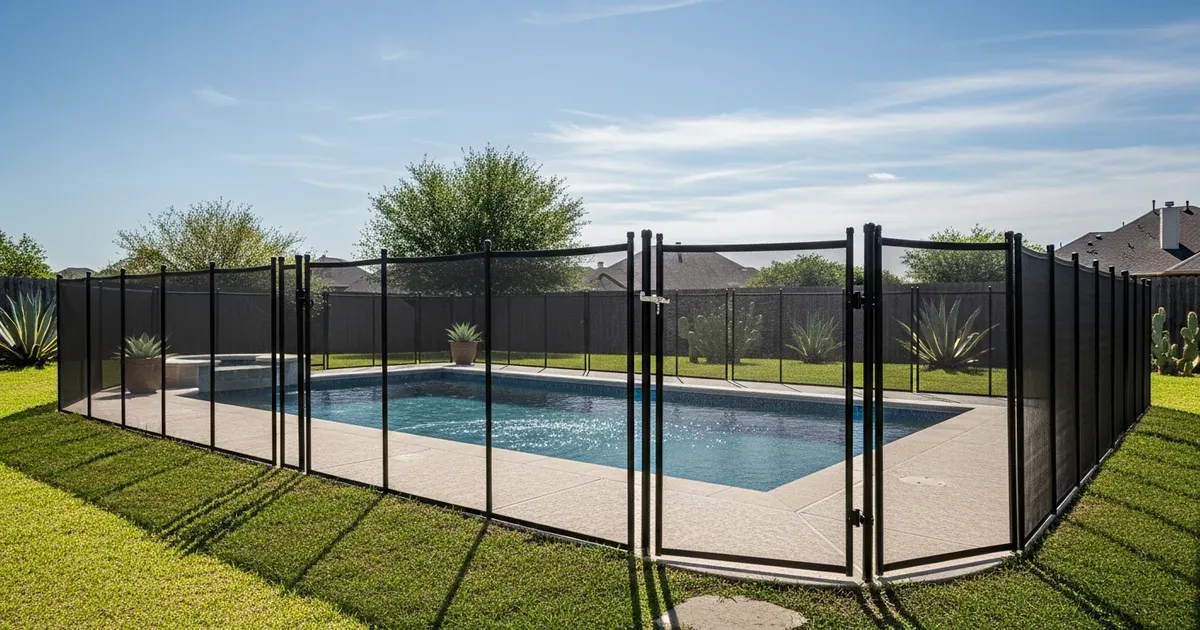
Removable Mesh Fences: These fences are designed specifically for pool safety and can be taken down when not needed, though it’s recommended to keep them up when children are around. They typically consist of strong mesh fabric supported by poles inserted into the pool deck.
- They are highly effective, difficult for children to climb, and offer good visibility into the pool area. Installation is often quicker than permanent fences. In Denton, you can expect to pay $15-$25 per linear foot installed for a quality mesh fence. For a 100-foot perimeter, this would be $1,500 to $2,500.
- Denton’s clay soil can impact installation for both permanent and removable fences. Professional installers know how to properly anchor poles in our challenging soil conditions, ensuring stability and long-term safety.
Regardless of the type, ensure all gates are self-closing and self-latching, and the latch is out of a child’s reach (typically at least 54 inches from the ground). Regularly inspect your fence for any damage, loose latches, or gaps that a child could squeeze through.
Layer 2: Pool Covers – Adding an Extra Shield
A safety pool cover acts as another physical barrier, preventing access to the water itself. It’s especially valuable when the pool is not in use for extended periods. It’s important to distinguish between a safety cover and a solar cover or winter cover. Only an ASTM F1346-91 certified safety cover can bear the weight of a child or adult and prevent accidental drowning.
Types of safety covers include:
- Automatic Safety Covers: These covers are permanently installed and operate with the push of a button, gliding across the pool surface. They are incredibly convenient and effective, completely sealing off the pool.
- However, they are the most expensive option, ranging from $8,000 to $15,000 or more depending on pool size and shape. This investment offers unparalleled ease of use and safety.
- Manual Safety Covers: These are typically solid or mesh covers that are stretched taut over the pool and secured to anchors around the deck. They require manual effort to put on and take off.
- They are very effective at preventing access and keeping debris out. Costs for a manual safety cover in Denton generally range from $1,200 to $3,000+, depending on the pool’s dimensions and the material chosen.
- Winter Covers (Non-Safety): These are meant for debris and evaporation control during the off-season, but they are NOT safety covers. They will not support the weight of a child.
Given Denton’s often dusty conditions and strong winds, a good pool cover also helps keep your pool cleaner and reduces evaporation, which is a bonus during our extremely hot, dry summers.
Layer 3: Alarms – Your Early Warning System
Alarms provide an audible warning if a child approaches or enters the pool area. They add a crucial layer of vigilance, particularly important in busy households.
- Door and Gate Alarms: These are installed on all doors and gates that provide access to the pool area from your home or yard. They emit a loud alarm whenever opened.
- Simple battery-operated models cost $20-$50 each. More advanced, wired systems can be integrated into home security and cost more.
- Ensure all doors leading to the pool are equipped with alarms that sound immediately when opened, and cannot be easily turned off by a child.
- Pool Alarms (Surface or Sub-surface): These devices detect movement in the water.
- Surface alarms float on the water and sound when ripples indicate something has entered.
- Sub-surface alarms are installed beneath the coping and detect displacement of water.
- These alarms typically cost $100-$300. While they provide an important alert, they should never replace physical barriers or supervision. They are a backup, not a primary prevention method.
Remember, alarms are designed to alert you, not to prevent entry. They buy you precious seconds, but only if you are within earshot and respond immediately.
Ready to Enhance Your Pool's Safety?
Denton Home Services connects you with licensed, insured contractors — free estimates, no trip fees, no pressure.
Find Pool Safety Experts →Layer 4: Constant Supervision & Education – The Human Element
Even with the best physical barriers and alarms, nothing replaces constant, active adult supervision. This is the most vital layer of protection.
- Designate a “Water Watcher”: When children are in or near the pool, assign a specific adult to be the “water watcher.” This person’s sole responsibility is to watch the children in the pool, without distractions (no phones, books, or conversations). Rotate this role among adults.
- Learn CPR and First Aid: In the unfortunate event of an emergency, knowing CPR can save a life. The Denton Fire Department and local Red Cross chapters offer CPR and first aid courses. Investing $50-$100 per person for this training is invaluable.
- Enroll Children in Swim Lessons: As soon as they are old enough, enroll your children in formal swim lessons. The Denton Natatorium and many private instructors offer lessons for various age groups. While swim lessons don’t make a child “drown-proof,” they teach crucial water safety skills. Expect to pay $100-$300 per child for a session of lessons.
- Establish and Enforce Pool Rules: Clearly communicate and consistently enforce rules like “no running,” “always ask permission before going near the pool,” and “no diving in shallow areas.”
Layer 5: Other Safety Devices & Practices
Beyond the main layers, several other practices and devices contribute to a safer pool environment:
- Safety Equipment: Keep a life ring with a rope and a shepherd’s hook (a long pole with a hook on the end) readily accessible near the pool. These can be used to pull someone out of the water without having to jump in yourself.
- Anti-Entrapment Drain Covers: Ensure your pool’s main drain covers are anti-entrapment compliant. Older, flat drain covers can create powerful suction that can trap a swimmer. Upgrading these covers, often costing $50-$200, is a critical safety measure, especially if you have an older pool.
- Chemical Storage: Store all pool chemicals in a locked, secure area, out of reach of children and pets. Improper storage can lead to accidental poisoning or chemical burns.
- Clear Pool Deck: Keep toys, furniture, and other items away from the immediate pool edge to prevent tripping hazards. Remove all toys from the pool after use so they don’t tempt children to reach for them.
- Emergency Contact Information: Have emergency numbers (911, poison control) clearly posted near the pool area or easily accessible on your phone.
Denton-Specific Considerations for Pool Safety
Living in Denton means dealing with unique environmental factors that can influence your pool safety choices:
- Extreme Summer Heat: Our 100+ degree summers mean pools are in constant use, increasing exposure and potential risks. This reinforces the need for robust, always-on safety measures.
- Clay Soil: Denton’s expansive clay soil can pose challenges for fence installation, requiring deeper footings and careful technique to ensure stability. Professional fencing contractors are familiar with these conditions.
- Hail Storms: Denton County experiences its share of severe weather, including hail. Large hail can damage pool covers, fences, and even pool equipment. Regularly inspect your safety features after a storm, just as you would inspect your roofing.
- Local Codes: Always refer to the City of Denton’s current building codes for pool barriers. These codes are in place to protect our community and ensure minimum safety standards are met.
- Neighborhoods: Whether you’re in a bustling community like Rayzor Ranch, a family-friendly area in Argyle or Corinth, or a more serene setting like Robson Ranch, pool safety is a universal concern for all Denton County residents.
Choosing the Right Professionals for Installation & Maintenance
Implementing many of these safety layers, especially fences and automatic covers, often requires professional installation. Hiring licensed and insured contractors is crucial. They ensure installations meet local codes, are done correctly, and will provide the safety you expect.
Denton Home Services can connect you with trusted local professionals who specialize in pool safety installations, from secure fencing to advanced pool cover systems. We work with contractors who understand Denton’s unique climate and building requirements, ensuring your family’s safety is handled with expertise and care. For any general repairs or smaller safety installations, our handyman services partners can also assist.
Cost Summary for Pool Childproofing Measures in Denton
Here’s a quick overview of estimated costs for various childproofing measures in the Denton market:
| Childproofing Measure | Estimated Cost Range (Denton, TX) | Description |
|---|---|---|
| Permanent Pool Fence | $2,000 - $4 |
Frequently Asked Questions
What is the most effective and affordable pool alarm system for a Denton home?
Submersible pool alarms, which detect water displacement, are highly effective and can range from $100-$300. Gate alarms, costing $20-$50 per gate, are also crucial for alerting you if a child opens a pool entry point. Combining these layers provides robust, budget-friendly protection for your Denton property.
How long does it typically take to install a safety pool cover in Denton, Texas?
The installation of a custom safety pool cover in Denton typically takes 1-2 days, depending on the pool's size and shape. This timeframe includes precise measurements, drilling anchor points, and ensuring a snug, secure fit. Professional installation is recommended to guarantee it meets safety standards for North Texas weather.
Are there any DIY pool safety checks Denton homeowners should perform regularly?
Absolutely; Denton homeowners should regularly check all pool gates for proper self-closing and self-latching functionality, ensuring latches are out of a child's reach. Also, inspect fences for any damage or gaps, and confirm all pool alarms are operational with fresh batteries. These simple checks can prevent accidents during our long Texas pool season.
Does Denton County have specific requirements for pool gates beyond the city's 4-foot height rule?
While the City of Denton sets the primary standard for a 48-inch high fence with self-closing, self-latching gates opening outwards, Denton County itself doesn't typically impose separate, additional regulations for residential pools. However, all gates must have release mechanisms placed at least 54 inches from the bottom of the gate to be inaccessible to young children. Always verify with Denton Development Services for the most current local codes.
What are the benefits of a pool safety net versus a solid pool cover for families in North Texas?
A pool safety net offers excellent child protection by creating a taut barrier that prevents access, while still allowing the pool's aesthetic to be visible and water to breathe, which is beneficial in North Texas heat. Solid pool covers, conversely, provide debris protection and can reduce evaporation, but may require more effort to remove and store, and can collect rainwater. Both are effective barriers, but nets are often preferred for daily use due to ease and visual appeal.
What are critical supervision tips for parents with pools in Denton during the summer?
During Denton's hot summers, designate a "Water Watcher" who is solely responsible for supervising children near the pool, free from distractions like phones. Enroll children in swim lessons early and ensure an adult trained in CPR is always present. Constant, active supervision is the most vital layer of protection.
How often should pool safety barriers be professionally inspected in Denton, TX?
It is highly recommended that pool safety barriers in Denton, TX, undergo a professional inspection annually, ideally before the peak summer swimming season. This ensures all components, from fences and gates to alarms and covers, are in proper working order and can withstand the wear and tear from our extreme Texas weather. Regular checks help maintain compliance with local safety codes and provide peace of mind.
At what age should children living in Denton begin formal swim lessons for pool safety?
The American Academy of Pediatrics recommends that children typically begin formal swim lessons around age one, though readiness varies by child. Many Denton aquatic centers and swim schools offer parent-and-tot classes for infants and toddlers. Early swim instruction is a crucial layer of protection for children in our pool-centric North Texas climate.
Denton Home Services connects you with licensed, vetted contractors — fast and free.
Get a Free Estimate →