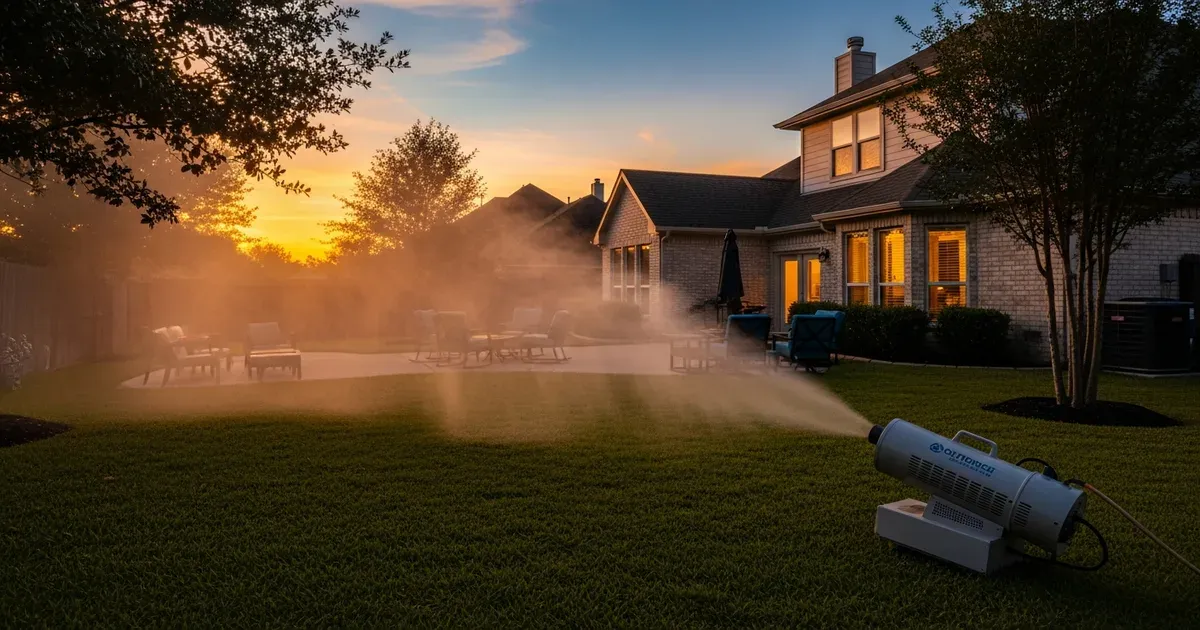
Denton homeowners know the drill: as soon as the weather warms up, the mosquitoes come out. These tiny pests aren’t just annoying; they can also carry diseases like West Nile Virus, making them a real health concern in our community. Knowing when to start mosquito treatment is key to enjoying your backyard without constant swatting and itching. Let’s dive into when mosquito season truly begins in Denton and how you can best protect your home and family.
Why Denton County is a Mosquito Magnet
Our corner of North Texas has everything mosquitoes love. Denton County’s climate features long, hot, and often humid summers, with temperatures frequently soaring above 100 degrees. This creates the perfect breeding ground for these insects. We also have numerous lakes, ponds, creeks, and even just simple puddles that collect water, especially after our spring and summer thunderstorms.
Our unique clay soil in Denton is another factor. It doesn’t drain quickly, meaning standing water can linger for days in low spots, empty flower pots, or even in the grooves of your driveway. This provides ample opportunity for mosquitoes to lay their eggs. Whether you live near Lake Lewisville, in a newer development like Rayzor Ranch, or in an established neighborhood in the heart of Denton, mosquitoes are a universal challenge.
Understanding the Mosquito Life Cycle
To effectively fight mosquitoes, it helps to understand how they grow. Mosquitoes go through four main stages: egg, larva, pupa, and adult. The entire process, from egg to adult mosquito, can take as little as 5 to 14 days, depending on the temperature and species.
Female mosquitoes lay their eggs on or near water. When the eggs hatch, they become larvae, often called “wigglers,” which live in the water. They then turn into pupae, or “tumblers,” before emerging as adult mosquitoes, ready to bite and breed. Because this cycle is so fast, consistent treatment is important to break the cycle at every stage.
When Does Mosquito Season Truly Begin in Denton?
The start of mosquito season in Denton isn’t a fixed date on the calendar; it’s mostly determined by temperature. Mosquitoes become active and begin breeding once the average daily temperature consistently stays above 50 degrees Fahrenheit. In Denton, this usually means we start seeing mosquito activity around early to mid-March.
However, our unpredictable North Texas weather can sometimes shift this timeline. An unusually warm February or early spring rains can kickstart mosquito activity even earlier. Conversely, a prolonged cold snap might delay their arrival. Generally, mosquito season in Denton County runs strong from March or April all the way through October or even early November, until the first hard freeze significantly drops temperatures.
Signs You Need Mosquito Treatment
You might not need a calendar to tell you when it’s time for mosquito treatment; your body and your yard will give you plenty of clues.
Here are some common signs:
- Visible Mosquitoes: The most obvious sign is seeing adult mosquitoes flying around your yard, especially during dawn and dusk. If you notice them buzzing around your porch in Robson Ranch or while watering your plants in Southridge, it’s time to act.
- Frequent Bites: If you or your family are getting bitten every time you step outside, even for a few minutes, your mosquito population is likely out of control.
- Standing Water: Take a walk around your property. Do you have puddles that linger after rain? Is water collecting in clogged gutters, old tires, bird baths, or pet bowls? These are prime breeding spots.
- Neighbors are Treating: If you notice your neighbors are already getting professional mosquito treatments, it’s a good indicator that the mosquito population is active in your immediate area. Mosquitoes don’t respect property lines!
DIY Mosquito Control: What You Can Do
Before calling in the professionals, there are several things you can do around your Denton home to reduce mosquito breeding grounds and activity. Think of it as making your yard less inviting.
- Eliminate Standing Water: This is the absolute most important step.
- Empty and clean bird baths at least once a week.
- Change water in pet bowls daily.
- Clear clogged gutters. Our intense rain and hail storms can fill gutters quickly with debris, creating perfect mosquito nurseries. Consider getting your gutters cleaned regularly to prevent this.
- Remove old tires, buckets, tarps, and anything else that can hold water.
- Drill drainage holes in the bottom of recycling bins.
- Ensure your sprinkler system isn’t creating puddles, especially with our clay soil.
- Maintain Your Yard:
- Trim tall grass, weeds, and overgrown bushes. Adult mosquitoes like to rest in dense, shady vegetation.
- Keep your lawn mowed regularly.
- Proper lawn care and landscaping can make a big difference in reducing mosquito habitats.
- Use Repellents: When spending time outdoors, especially during peak mosquito hours (dawn and dusk), use EPA-approved insect repellents containing DEET, picaridin, or oil of lemon eucalyptus.
- Screen Your Home: Make sure all windows and door screens are in good repair to keep mosquitoes from getting inside your home.
While these DIY methods are helpful, they often aren’t enough to control a widespread mosquito problem, especially during peak season in Denton’s climate.
Professional Mosquito Treatment Options
For more comprehensive and long-lasting mosquito control, professional services are often the best solution. Denton Home Services connects you with experts who understand our local challenges and can apply effective treatments.
Here are the main types of professional mosquito treatments:
- Barrier Sprays: This is the most common and effective treatment. Technicians apply a specialized insecticide to the perimeter of your yard, focusing on bushes, shrubs, and other resting areas where mosquitoes hide. This creates a barrier that kills mosquitoes on contact and continues to repel them for several weeks. Treatments are typically done every 3-4 weeks throughout the mosquito season.
- Larvicides: For areas with standing water that cannot be drained (like ponds or decorative fountains), larvicides can be used. These products kill mosquito larvae before they can develop into biting adults. This is a crucial step in breaking the mosquito life cycle.
- Mosquito Misting Systems: These automated systems are installed around your property and release a fine mist of insecticide at programmed intervals, usually during peak mosquito activity. They offer continuous protection and are often favored by homeowners with severe mosquito issues or those who spend a lot of time outdoors.
- All-Natural/Eco-Friendly Options: Many pest control companies now offer treatments using essential oils (like rosemary, peppermint, or cedarwood) that repel and kill mosquitoes. These are often preferred by homeowners concerned about traditional insecticides, though they may require more frequent application.
Ready for a Mosquito-Free Yard?
Denton Home Services connects you with licensed, insured contractors — free estimates, no trip fees, no pressure.
Get Your Free Mosquito Treatment Estimate →Cost of Mosquito Treatment in Denton
The cost of professional mosquito treatment in Denton can vary based on several factors: the size of your yard, the type of treatment chosen, the frequency of applications, and the specific company you hire.
Here’s a general idea of what you might expect to pay:
| Service Type | Average Cost Range (Denton, TX) | Details |
|---|---|---|
| One-Time Barrier Spray | $100 - $250 | Good for special events (parties, outdoor gatherings). Provides immediate relief for a few weeks. Price depends on yard size. |
| Monthly Barrier Spray Plan | $70 - $150 per treatment | Most popular option for seasonal control. Treatments typically applied every 3-4 weeks from March/April to October/November. Many companies offer discounts for seasonal contracts. |
| Seasonal Package | $500 - $1,200+ | Covers the entire mosquito season (6-8 treatments). Often includes a slight discount compared to paying per month. Cost depends on number of treatments and yard size. |
| Mosquito Misting System | $2,500 - $5,000+ (Installation) | Significant upfront investment. Offers continuous, automated protection. Includes installation, system components, and often a starter supply of insecticide. Requires professional refills and maintenance, typically $50 - $150 per refill depending on usage. |
| Larvicide Treatment | $50 - $100 per application | Often included as part of a barrier spray plan, or as a targeted treatment for specific standing water sources. |
Factors influencing cost:
- Yard Size: Larger properties require more product and time, increasing the cost.
- Vegetation Density: Yards with dense bushes and trees may require more thorough application.
- Treatment Type: Misting systems are a much larger investment than barrier sprays.
- Company: Different pest control companies will have varying pricing structures. Always get a few quotes.
- Discounts: Ask about discounts for new customers, seasonal contracts, or combining mosquito control with other pest control services.
Beyond Mosquitoes: Other Denton Pests to Watch For
While mosquitoes are a major concern, they’re just one of many pests that thrive in Denton’s climate. Our warm weather and varied environment also make us susceptible to other common invaders.
You might also encounter:
- Ants: Especially fire ants, which are a common nuisance in Denton lawns.
- Spiders: Including venomous species like brown recluse and black widow spiders seeking shelter in homes and garages.
- Rodents: Mice and rats can become a problem, especially as temperatures drop in the fall, seeking warmth and food indoors.
- Termites: These silent destroyers are a constant threat in North Texas, causing significant damage to homes. Regular inspections are crucial.
- Wasps and Hornets: Active throughout the warmer months, building nests around eaves and outdoor structures.
Many pest control companies offer comprehensive plans that cover a range of pests, not just mosquitoes. Combining services can often be more cost-effective. If you’re dealing with multiple pest issues, Denton Home Services can connect you with general pest control experts who can create a tailored plan for your home.
Denton-Specific Tips for Mosquito Prevention
Beyond professional treatments, local knowledge can make a big difference in preventing mosquitoes around your Denton home.
- Check Sprinkler Systems: Our clay soil means that even small leaks or over-spraying from your sprinkler system can create puddles that linger for days, becoming mosquito breeding grounds. Check your system regularly for proper function.
- Monitor Rain Barrels: If you use rain barrels for gardening, ensure they are tightly sealed or screened to prevent mosquitoes from entering and laying eggs.
- Community Awareness: Stay informed about local mosquito abatement efforts from the City of Denton or Denton County. They often conduct surveillance and may spray public areas when mosquito populations or disease risks are high.
- Hot Tub/Pool Maintenance: Keep your hot tub covered when not in use and ensure your swimming pool is properly chlorinated and circulated. Stagnant pool water is a huge attractant.
- Consider Outdoor Drain Maintenance: If you have outdoor drains, ensure they are clear of debris and draining properly. Clogged drains can hold water and become breeding sites. Regular drain cleaning might be necessary for outdoor systems.
Bottom Line
Mos