Pest Control in Denton, TX: What Every Homeowner Needs to Know
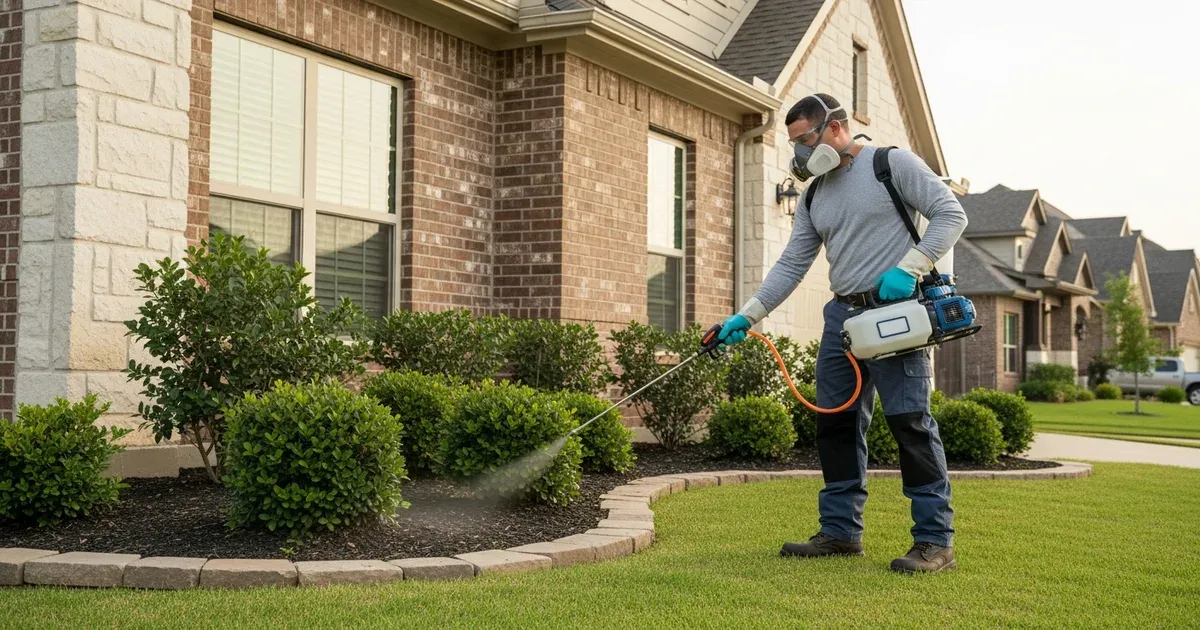
Denton’s warm climate and expansive clay soil create ideal conditions for just about every pest that makes Texas homeowners miserable. Here’s a practical guide to what you’re dealing with, what it costs to treat, and how to pick an exterminator who actually solves the problem.
Denton’s Worst Pests by Season
North Texas doesn’t get a real break from pests. Here’s what’s most active and when:
Spring (March–May):
- Fire ants — Mound building peaks after spring rains. Denton’s clay soil retains moisture, which fire ants love
- Termites — Subterranean termite swarms start in March. Denton is in a high-risk termite zone
- Mosquitoes — Breeding starts as soon as standing water appears after spring storms
Summer (June–August):
- American cockroaches — They move indoors chasing moisture when it’s 100+ degrees outside
- Scorpions — More common near Lake Lewisville and in areas like Corinth, Hickory Creek, and older Denton neighborhoods
- Wasps and yellow jackets — Nest building peaks midsummer
Fall (September–November):
- Rodents — Mice and rats start moving indoors as temperatures drop. Newer Denton subdivisions near open fields are especially prone
- Brown recluse spiders — Most active in fall. They love garages, attics, and storage boxes
- Fire ants — A second activity peak after fall rains
Winter (December–February):
- Rodents — Peak indoor activity. Attic spaces in Denton homes are particularly attractive to roof rats
- German cockroaches — These stay indoors year-round and are the species you find in kitchens
Treatment Costs in Denton
| Service | Typical Cost |
|---|---|
| One-time general treatment | $150 – $300 |
| Quarterly service plan (per visit) | $100 – $175 |
| Quarterly service plan (annual) | $400 – $700 |
| Fire ant yard treatment | $100 – $200 |
| Termite inspection | $75 – $150 (often free with treatment) |
| Termite treatment (liquid barrier) | $800 – $2,500 |
| Termite treatment (bait stations) | $1,200 – $3,500 |
| Rodent exclusion + trapping | $250 – $600 |
| Mosquito yard treatment (per visit) | $75 – $125 |
| Bed bug treatment (per room) | $300 – $500 |
Prices reflect Denton-area rates as of early 2026. Costs vary based on home size, infestation severity, and treatment method.
Quarterly Service vs. One-Time Treatment
Most Denton pest control companies push quarterly plans, and in this climate, they’re actually worth it. Here’s why:
- Barrier treatments break down. The perimeter sprays that keep bugs out of your home degrade in 60–90 days, especially in Denton’s heat and with heavy rains washing product away
- Pests don’t take seasons off. Unlike northern states, North Texas has pest pressure at least 9 months out of 12
- Prevention costs less than reaction. A $400/year quarterly plan is cheaper than two $250 emergency calls
That said, if you’re only dealing with one specific issue — like a fire ant problem in your yard — a one-time targeted treatment makes more sense than a full quarterly plan.
Get a Pest Control Quote Today
Denton Home Services connects you with licensed, insured exterminators who service the Denton area. Free inspections, no contracts required.
Get Matched with an Exterminator →How to Choose a Pest Control Company in Denton
Not all exterminators are equal. Here’s what to verify:
- Texas SPCS license — Texas requires pest control companies to be licensed through the Structural Pest Control Service. Ask for their license number and verify it
- Insurance — General liability and workers’ comp are non-negotiable
- Treatment transparency — A good technician will tell you exactly what chemicals they’re using, where they’re applying them, and what safety precautions to follow (especially with kids and pets)
- Guarantee terms — Most quarterly plans include free re-treatments between visits if pests come back. Get this in writing
- Local knowledge — An exterminator who knows Denton’s pest patterns, soil conditions, and common construction types will be more effective than a national chain following a generic playbook
DIY Prevention Tips for Denton Homes
Professional treatment works best when combined with basic prevention:
- Seal entry points — Caulk gaps around pipes, AC lines, and utility entries. Denton homes settle in clay soil, which opens gaps over time
- Fix moisture issues — Repair dripping faucets, leaky pipes, and AC condensation lines. Roaches and termites are drawn to moisture
- Trim vegetation — Keep bushes and tree branches at least 12 inches from your home’s exterior
- Store firewood away from the house — At least 20 feet. Firewood stacks are termite and scorpion magnets
- Clean gutters — Clogged gutters create standing water for mosquitoes and moisture damage that attracts wood-destroying insects
Bottom Line
Pest control in Denton is a year-round necessity, not a seasonal one. Most homeowners get the best value from a quarterly service plan at $400–$700 per year, which keeps a defensive barrier around the home and includes re-treatments if anything breaks through. For termites, get an annual inspection — catching them early can save thousands in structural damage.
Frequently Asked Questions
What are the most common pests in Denton, TX?
The most common household pests in Denton are fire ants, American cockroaches (waterbugs), termites, mosquitoes, brown recluse spiders, and rodents. Scorpions are also found in areas near Lake Lewisville and in older neighborhoods.
How much does pest control cost in Denton?
One-time treatments cost $150–$300 depending on the pest and home size. Quarterly service plans, which are the most common approach, run $100–$175 per visit or $400–$700 per year.
How often should you spray for bugs in North Texas?
Quarterly treatments are the standard recommendation for Denton homes. The warm, humid climate means pests are active 9–10 months of the year, and quarterly service keeps a protective barrier around your home year-round.
Can I effectively do my own pest control in Denton, Texas, or is professional service necessary for severe infestations?
While DIY products can offer temporary relief for minor issues, Denton's persistent pest pressure and specific species like subterranean termites or aggressive fire ants often require professional expertise. For serious infestations, a licensed exterminator has access to commercial-grade treatments and knowledge of local pest behavior that DIY solutions simply cannot match. This ensures a more effective and long-lasting solution, especially in areas prone to specific pests like Lake Lewisville scorpions.
What are the common signs of termites in a Denton home, and when should I schedule an inspection?
Look for mud tubes on foundations, discarded wings near windows in spring (typically March-May), or damaged wood that sounds hollow. Denton is a high-risk termite zone, so annual inspections are highly recommended, even without visible signs, with costs typically ranging from $75-$150. Early detection is key to preventing extensive and costly structural damage to your North Texas home.
How does Denton's unique climate and expansive clay soil impact pest control effectiveness and challenges?
Denton's warm climate means year-round pest activity, breaking down outdoor barrier treatments faster due to heat and frequent heavy rains. The expansive clay soil common in Denton County also creates ideal tunneling conditions for subterranean termites and provides stable environments for fire ant mounds, making these pests particularly resilient. This constant environmental pressure often necessitates more frequent professional intervention to maintain effective pest barriers around your home.
Are there specific local regulations or environmentally friendly pest control options available for Denton homeowners?
While Denton County homeowners generally don't need permits for standard pest control, licensed professionals must adhere to state and federal pesticide application regulations. Many Denton pest control companies offer Integrated Pest Management (IPM) strategies, which prioritize eco-friendly solutions, targeted treatments, and exclusion methods to minimize chemical use. These options are ideal for homes near natural areas or with pets and children.
Beyond chemical treatments, what pest exclusion methods are most effective for homes in North Texas to prevent infestations?
Effective exclusion involves sealing all cracks and gaps in your foundation, around utility penetrations, and installing screens on vents and windows. Regularly trim shrubs away from your home's exterior and ensure proper drainage to eliminate standing water, which attracts mosquitoes. These preventative measures are crucial for keeping rodents, scorpions (especially in areas like Corinth), and cockroaches from entering your Denton home.
Denton Home Services connects you with licensed, vetted contractors — fast and free.
Get a Free Estimate →